An Opening to Matcha
We often compare matcha to whisky.
Not everyone starts with neat whisky.
And not everyone should start with pure matcha.
The first step is not authenticity.
It is openness.
YOHAKU Wasanbon Smooth Finish is a way into enjoying matcha—
inviting enjoyment first,
before depth is fully understood.
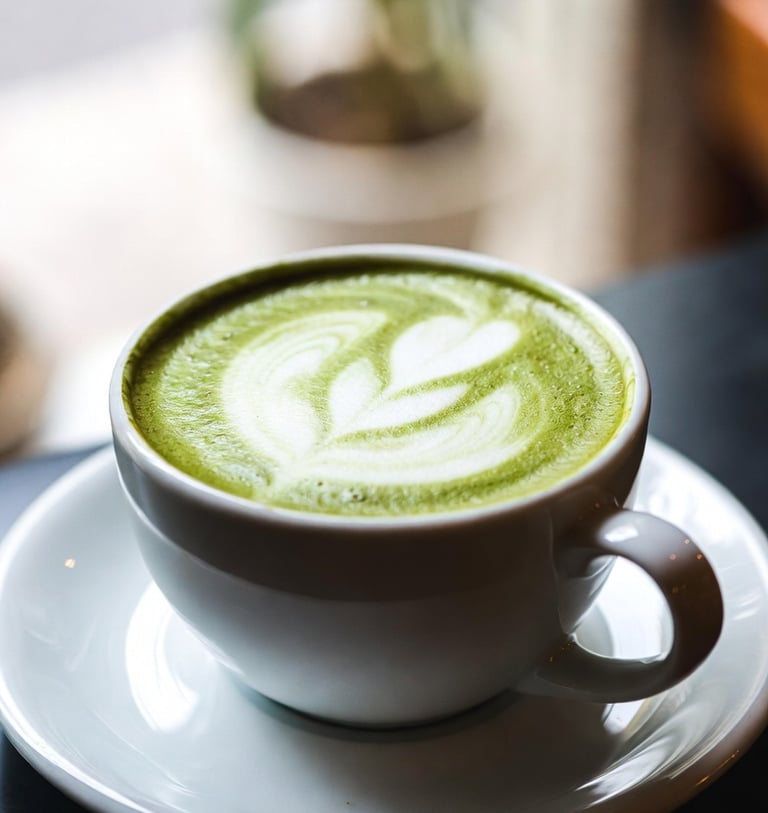
For this reason, we recommend a Matcha & Wasanbon MIX with a small amount of milk.
Not a latte, but a matcha cappuccino
(Matcha & Wasanbon MIX 1 : milk 1).
What Makes Matcha Great?
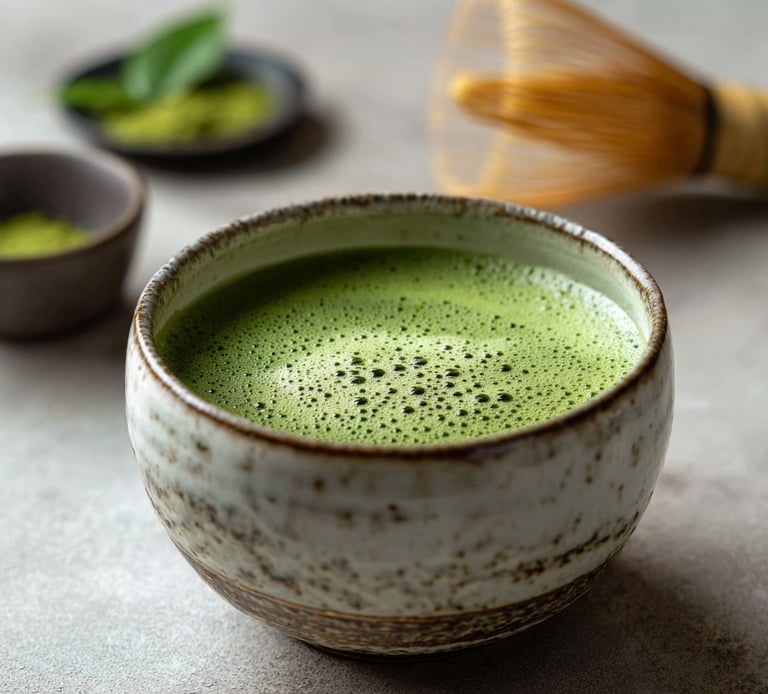
YOHAKU MATCHA is Ceremonial Grade.
But it is not a blend created by gathering what is commonly labeled as “luxury matcha.”
What we define as Ceremonial Grade is simple:
Region
Ichibancha
Shade-grown Tencha
Stone-milled
Matcha that requires nothing added.
Matcha that is already complete on its own.
Only matcha that meets this standard is what we call Ceremonial Grade.
Defining Quality by Conditions, Not Labels
A cup that carries umami, sweetness, and gentle bitterness in balance
does not happen by chance.
To achieve a truly refined cup,
we identified only the conditions that are absolutely necessary—
and nothing more.
That process led us to the following origin and methods.
--------------------------------------------
Single Estate Matcha — Uji
From the heartland of matcha
YOHAKU MATCHA comes from a single estate in Uji, Kyoto.
Single estate sourcing is essential because it eliminates variation:
No fluctuation in harvest timing
No inconsistency in cultivation methods
No yearly shifts in flavor profile
This consistency is the minimum requirement
for a cup with quiet clarity.
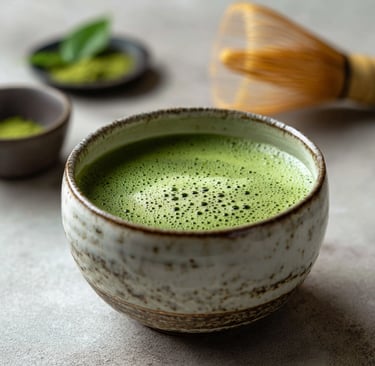
First Harvest (Ichibancha)
The concentration of winter’s nourishment
During winter, tea plants barely grow.
Instead, they store nutrients in their roots.
When spring arrives, the first leaves to emerge are known as Ichibancha.
These leaves are:
Fed by nutrients accumulated throughout winter
The most nutrient-dense leaves of the year
This is why first harvest leaves form the foundation
of the finest matcha.
Why Ichibancha Creates a Calm, Refined Taste?
The sense of calm in matcha is not driven by caffeine.
It is supported by L-theanine.
Ichibancha contains:
Exceptionally high levels of L-theanine
Significantly lower levels of catechins (bitterness compounds)
The reason is simple:
Early spring leaves
have not yet been exposed to strong ultraviolet light,
so the plant does not need to produce bitterness as protection.
The result is a flavor that is:
Smooth
Naturally sweet
Gentle on the nervous system
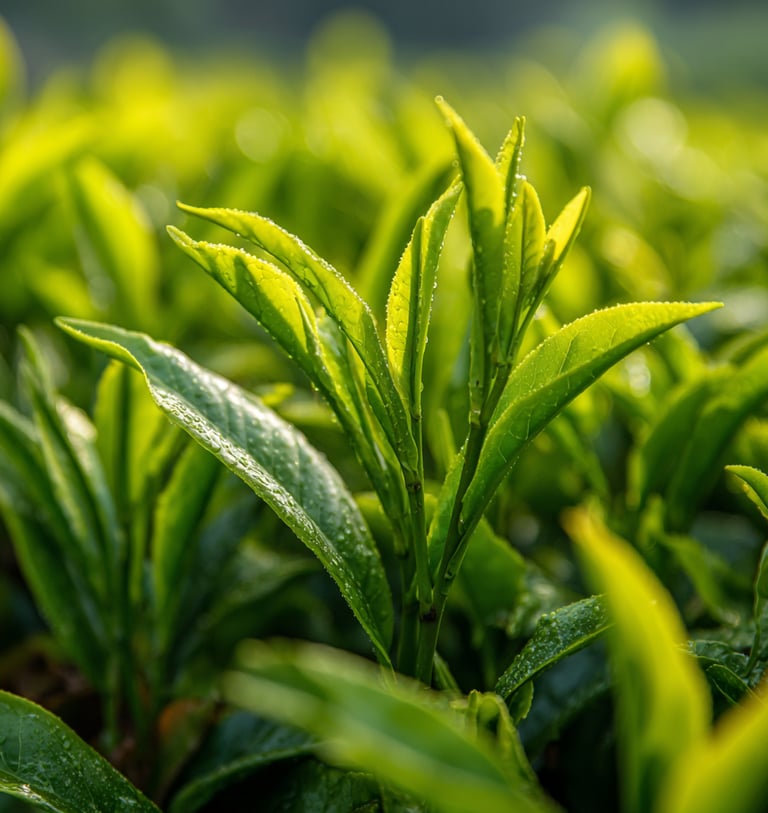
Shade-grown Tencha
Ichibancha + Shade = Matcha at its ideal state
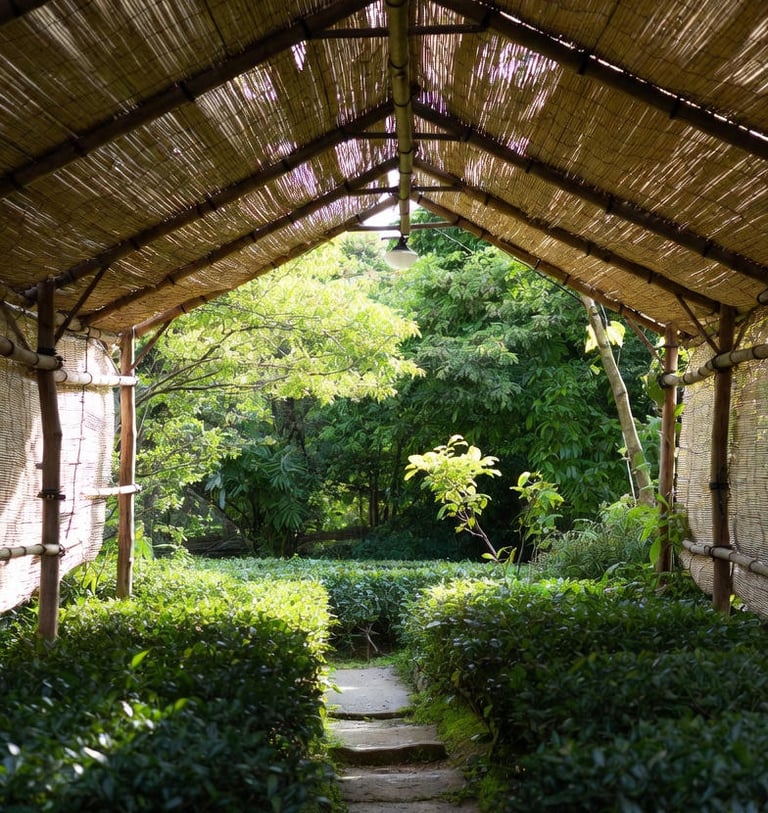
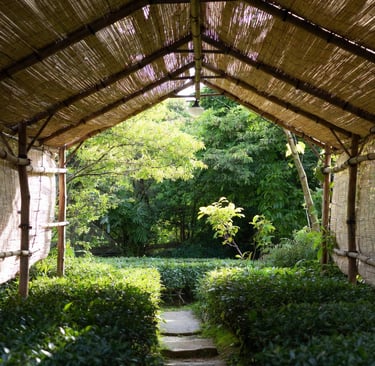
Before harvest, tencha leaves are shade-grown.
Shading the tea plants:
Suppresses photosynthesis
Prevents L-theanine from converting into catechins
Preserves sweetness and umami within the leaf
YOHAKU MATCHA uses only
first harvest, shade-grown tencha—
the optimal condition for matcha.
Stone-milled
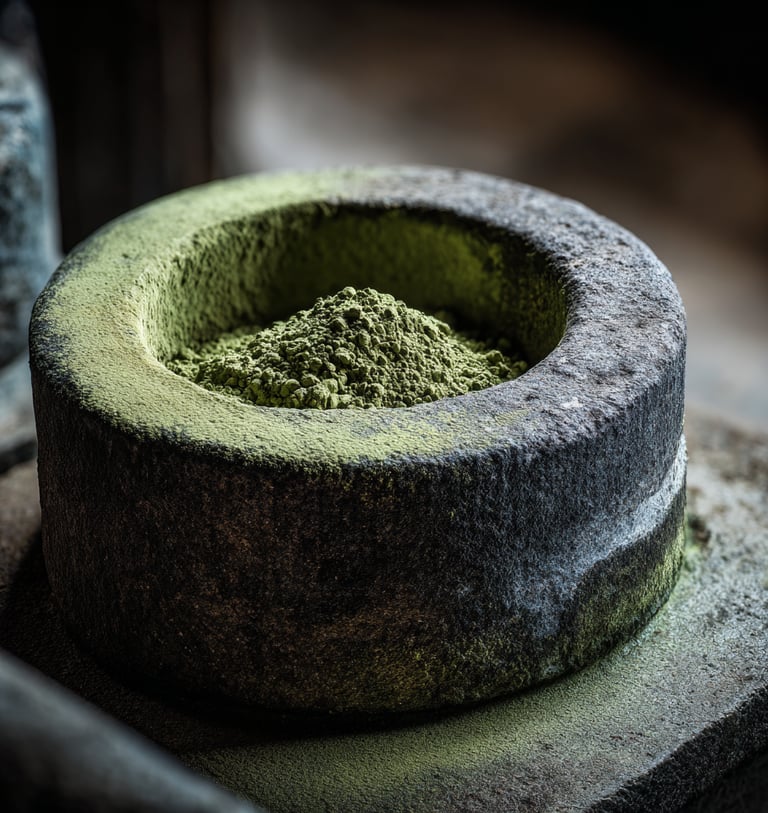
Stone mills are not grinding tools
After harvest, stems and veins are carefully removed.
Only the soft leaf flesh of tencha is stone-milled.
A stone mill is not merely a tool to make powder.
It is a mechanism designed to preserve:
Aroma
Particle structure
Temperature
Rhythm
without breaking them.
Why Stone Milling Matters
1. Minimal Heat
Matcha’s aroma is extremely delicate.
When excessive heat is generated during milling:
Volatile aromas dissipate
Raw, grassy notes emerge
Bitterness intensifies
Stone mills rotate extremely slowly
(approximately 30 rotations per minute), resulting in:
Minimal friction
Temperature increases of only a few degrees
This pace exists solely to protect aroma.
2. Uniform, Intact Particles
Mouthfeel in matcha is determined by particle size.
Stone-milled matcha
Particle size: approximately 10–15 μm
Rounded particles
No sharp edges
Smooth on the palate
High-speed milling (jet or blade mills)
Inconsistent particle size
Angular particles
Noticeable roughness
As a result:
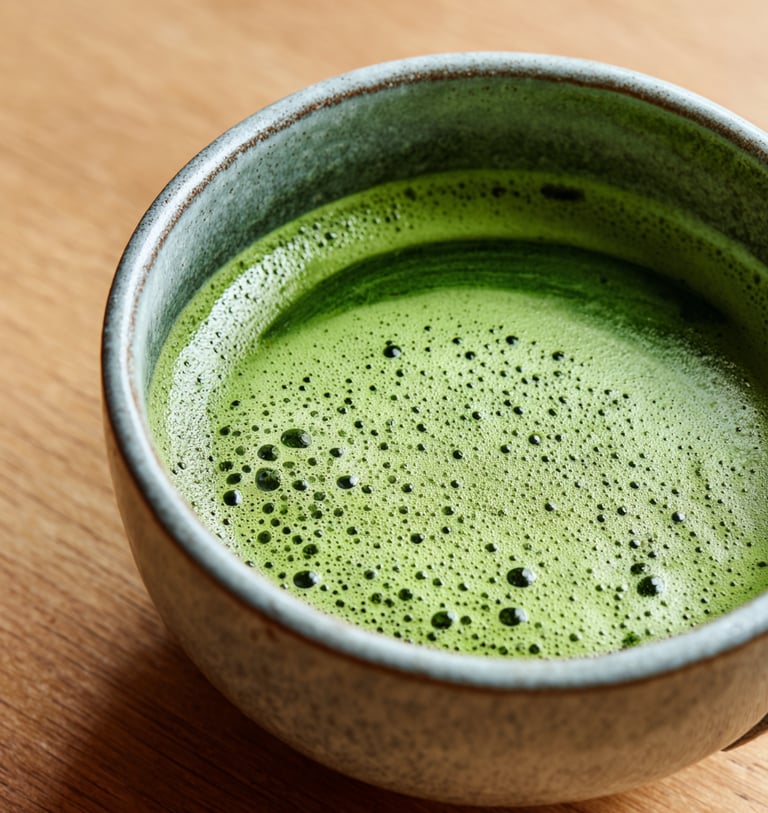
Stone-milled matcha creates a quiet, refined mouthfeel—even when whisked.
This sensation is extremely difficult to replicate by other methods.
Why Modern Machines Cannot Fully Replace Stone Mills?
Advanced jet mills and ball mills can:
Approximate particle size
Increase production efficiency
However, they cannot eliminate:
Heat buildup
Static electricity
Fractured particle surfaces
Numbers may look similar on paper,
but the sensory experience is not.
This difference is decisive.
The Resulting Flavor Profile
When all of these conditions are met,
matcha reveals itself not as a single note,
but as a progression.
A gentle sweetness upon first sip
Followed by deep, transparent umami
Finishing with refined bitterness
No element dominates.
The flavor unfolds in layers, then quietly recedes.
"A refined bitterness that enhances the umami, harmonizing with the overall flavor."
This natural gradient of taste
is what defines the finest quality matcha.
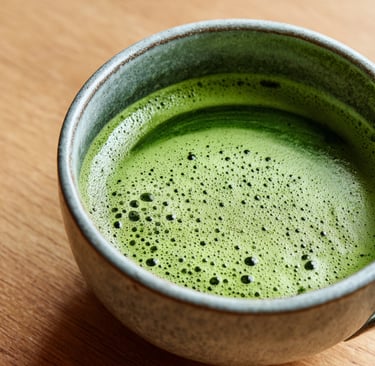
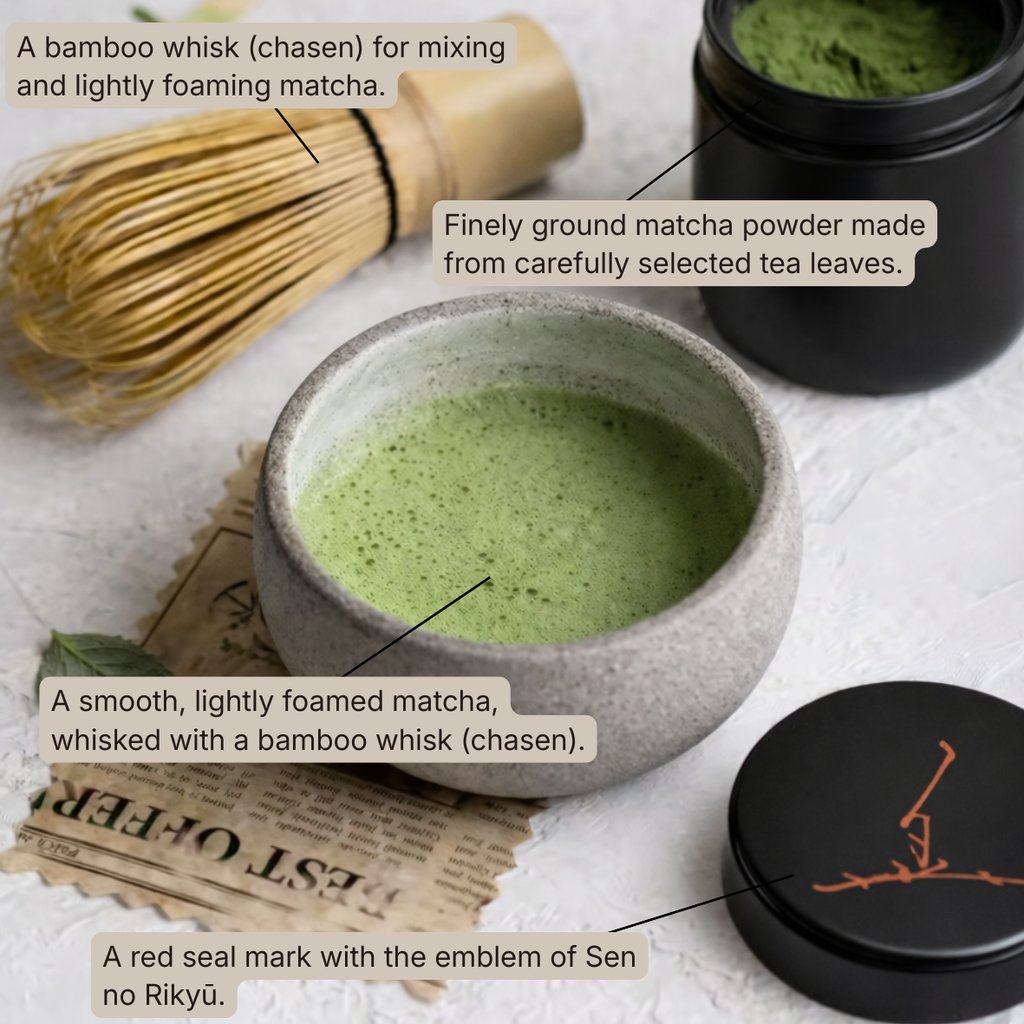
Yohaku Matcha — Ritual Set
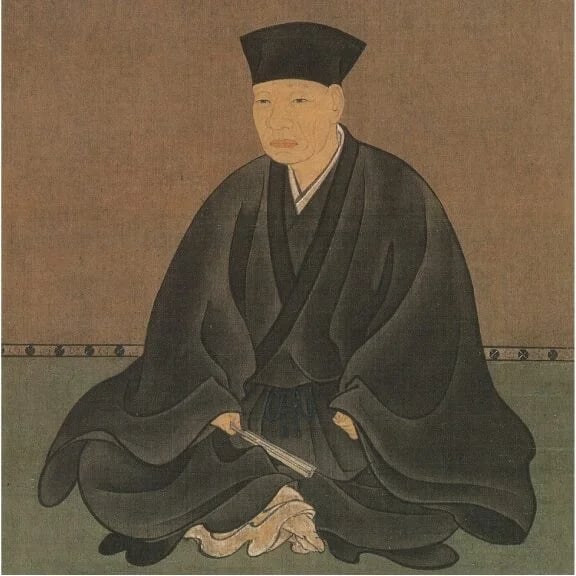
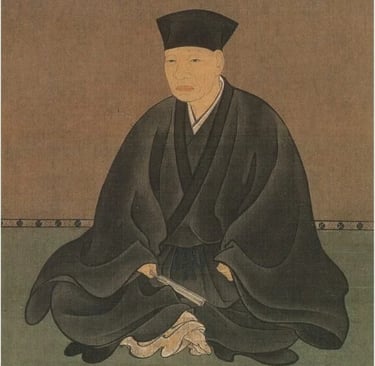
The Essence of Sen no Rikyū
Who is
Sen no Rikyū(千利休)?
Sen no Rikyū was a 16th-century Japanese tea master
who transformed the act of drinking tea into a complete cultural practice.
Before Rikyū, tea gatherings were often displays of wealth—
ornate rooms, expensive objects, and visual excess.
Rikyū changed this entirely.
He removed what was unnecessary
and focused on what truly mattered:
quietness, intention, and presence.
This approach became known as wabi-cha—
a style of tea that values simplicity, restraint, and imperfection.
For Rikyū, tea was not about impressing others.
It was about how the host and guest shared a single moment,
through careful preparation, humble tools, and mindful gestures.
Every action—
entering the tea room,
boiling water,
whisking matcha,
offering the bowl—
was treated as part of one continuous experience.
Rikyū’s philosophy shaped not only tea culture,
but Japan’s broader sense of beauty,
influencing architecture, ceramics, food, and daily life.
At its core, Rikyū’s teaching was simple:
Do less.
Remove excess.
And allow meaning to emerge.
Rikyū’s Morning Glory
One of the most famous stories about Sen no Rikyū appears in Sawashigetsushū.
Toyotomi Hideyoshi(who unified Japan in the late 16th century) heard that Rikyū’s garden was overflowing with morning glories,
and requested a tea gathering to see them.
But when he arrived, the garden was empty.
Every flower had been removed.
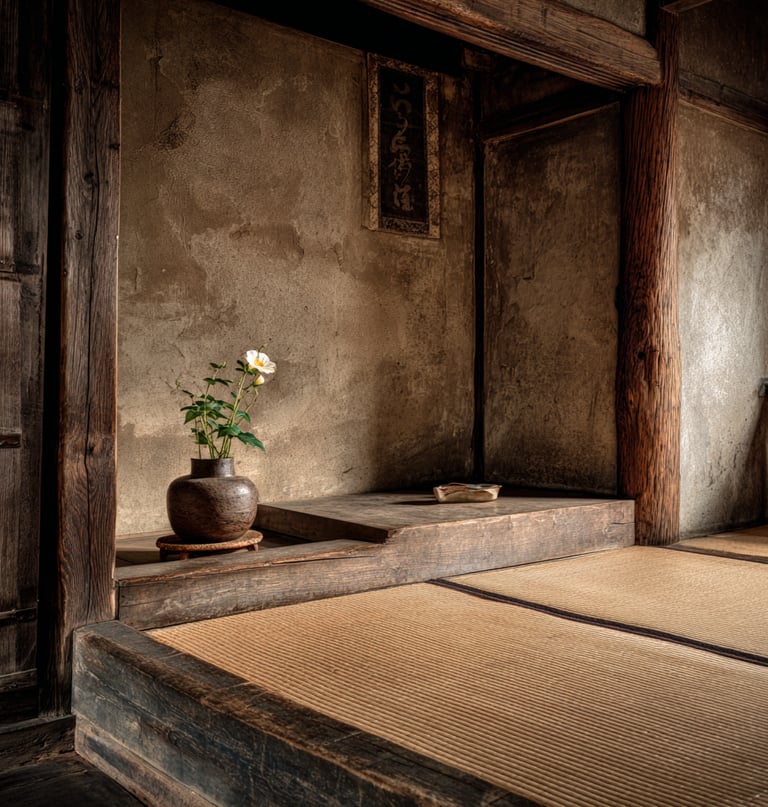
Then Hideyoshi entered the tea room—
and in the alcove, Rikyū had placed a single morning glory.
Not abundance, but selection.
Not “more,” but “the one that matters most.”
In Rikyū’s tea, flowers were never decoration.
They were beauty distilled.
--------------------
Why It Matters Today
We live surrounded by more—
more things, more options, more noise.
Rikyū’s morning glory offers a quiet alternative:
remove what distracts,
so what is essential can appear.
Rikyū’s gesture wasn’t about scarcity.
It was about return—
to one moment, one attention, one breath.


Contact
Reach out for questions or matcha stories
© 2025. All rights reserved.